So I’m thinking of starting some kind of regular list feature. I want it to be a weekly deal, and choosing Thursday nights might just work. I guess we’ll just have to see how it goes. Oh well.
Here are the rules: there aren’t too many. I’m not going to pick a length – I don’t want it be a Thursday Top Five or anything like that. Also, the lists will always be numbered, but said numbers may or may not represent a rank. I don’t think that most of the stuff I’ll choose to write about will lend itself to ranking… but then, I like ranking things. I like knowing that some things are the best and some aren’t. I abhor absolutes almost as much as I love them.
Anyways, this is the first one. It’s a list of albums that have changed my life. It’s hard to define what it means for an album to “change my life,” so here are some things it doesn’t mean:
1. This isn’t a list of my favorite albums. These are all among my favorite albums, but a lot of favorites are missing… and it’s even possible that the albums listed aren’t even my favorite by each represented artist.
2. I’m not trying to make a list of albums that have personally affected me, though many of these have; rather, I’m trying to make a list of albums that have changed my relationship with music. There won’t be any explanations on here that start with “After my girlfriend broke up with me, this was all I listened to for four months with a cup of cognac…”
3. This list isn’t definitive, and by definition can’t be. That’s what is great about music.
So, here it goes…
1. Francis the Mute, The Mars Volta
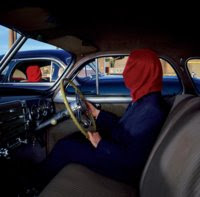
I picked this album up on a whim. At the time, I was into System of a Down. I’ll say that again: at the time, I was into System of a Down. The Mars Volta had just toured with them, and this album showed up as a top rock pick in Rasputin’s holiday buying guide. And it was on sale for $6.95. $6.95! Needless to say, I picked it up… and blew my mind. I was so engaged, surprised, impressed, amazed, shocked, et al, that I bought a copy to and mailed it to my best friend! I think what I told him, at the time, was that it was like watching a movie with your eyes.
I’m not one given to sensory hyperbole.
This album plays out on a different level than other albums. The lyrics aren’t often discernible, and when they are, they aren’t usually understandable (not that they aren’t cool). But Cedric’s voice is actually an instrument here, and it’s used incredibly – the high pitched emoting in the loooong intro to “Miranda, This Ghost Just Isn’t Holy Anymore,” the synthesized creepiness in the intro to “Cassandra Gemini”…
But let’s go back to the I-can-watch-this-with-my-ears part, because ultimately, that’s what makes this album make this list. Most TMV albums are concept albums based around a single narrative. This narrative plays out like a great sci-fi story. It fades in and out with the same acoustic melody, it has musical motifs that twist and turn and double back on each other, and when it comes down to it, you really are watching a narrative unfold while you listen. The lyrics don’t tell a story as words, but they do tell a story as another layer in the musical composition – and that’s the point.
2. Blonde on Blonde, Bob Dylan

In August 2005, I came back from an exodus. I found out that the Virgin Megastore in my hometown was closing down, so I went to pick up some music – which I had a newfound appreciation for. One sale item that seemed worth looking at was The Essential Bob Dylan, a two disc set of tunes from throughout the bard’s career. This was my first exposure.
I was hooked.
I needed to buy a proper studio album. I liked everything on the Essential, so I went online to see which albums were the most well-regarded. I ended up with Blonde on Blonde.
So here’s the thing: I had a friend ask me recently which Bob Dylan “era” was my favorite. That’s a tough question to answer, I said, but if I could only have one album forever, it’d probably be Blood on the Tracks (His response: Dude, that’s so depressing! I guess that’s just me…). That was a true answer. But Blonde on Blonde was what sold me. Dylan fascinated me because he was a poet in every sense of the word, sweeping through so many aspects of life… and in this album, among other things, was humor (“Rainy Day Women #12 & 35”), absolute beauty (“Visions of Johanna”), and – I can’t stress this enough – love (“Sad Eyed Lady of the Lowlands”).
While I would find Bob Dylan albums that I liked more, this was the one that changed things. This was the double album so full of brilliant writing that it couldn’t be ignored. And this was the album that made me understand the full range of emotion that music can present.
3. In The Aeroplane Over the Sea, Neutral Milk Hotel

Remember, up above, when I said that this wasn’t a list of albums that have personally affected me? Well, forget it for a second. I can’t talk about this album without talking about the back story. Two of my best friends who were a couple awhile back (and spent a lot of time with my girlfriend at the time and me) got really into this band. It was recommended to me, and I had heard this album briefly at a party, but never really listened. Then, one day, we were at the park playing Horse Balls (kind of like horseshoes but with a ladder and a pair of, uh, horse balls…), and the girl and I bet an album on the outcome. I won. Then her boyfriend played me, same bet, and he won. So I gave him My Morning Jacket’s At Dawn, and he gave me In the Aeroplane Over the Sea.
Now, the back story is important because I finally received the album at the girl’s going away party. She was leaving for the Peace Corps for two years. He hung around for another few months and then left to teach English in China. But I was there for their last goodbyes, and it was sad, and this is a sorrowful album – and so for me, those two are always wrapped up in this music.
That being said, it’s not why the album is on the list. I just feel like, for the sake of journalistic integrity, I have to divulge.
Here’s why the album is on the list: This album reminds me what music is like in its purest form. Everyone has that friend who is incredibly musically talented, can’t hold down a job, and can’t get their stuff together to get off the couch and into a studio. That friend made this album. It has fuzzed out guitars, weird instruments, and vocals sung with too much emotion to have much melodic quality. It lacks pretense and any major label/studio sensibility. And more than anything, it has lyrics about love and sex that sound like they were written by someone before they were famous and had to consciously write profound things. That’s a quality that cannot be overvalued.
4. Yankee Hotel Foxtrot, Wilco

I think Yankee Hotel Foxtrot is the Midwest. I don’t mean the place, obviously, but it’s certainly a crystallization of the idea. Music does that in a way that nothing else can. This was the first Wilco I ever listened to – ever – and it was obvious that they were from the Midwest. A lot of times, Jeff Tweedy writes lyrics about being wary of urban sprawl and the loneliness it engenders. In this album, he seems to write to write about the loneliness of relationships… and yet, somehow, the two never seem that different.
In a larger sense, Wilco fascinates me because they aren’t tied to any one musical identity. Every one of their albums has its own distinct personality (and this is why they are called the American Radiohead), but they always seem to be playing at the same things.
But this was the first one I heard. And the first song I heard was “I Am Trying to Break Your Heart.” And hearing Jeff Tweedy’s voice plead, broken but confident, “What was I thinking when we said, hello?” told me that I had found something incredible.
Buying this album was a part of a project that I’ve undertaken recently to find music that I actually like from my own time. I’d heard good things, and I picked Yankee Hotel Foxtrot up with a little faith but mostly due to another timely Rasputin sale. Ultimately, it changed my relationship with recent American Rock. It wasn’t what I remembered from alternative stations in high school. It was actually a landscape of artists trying to understand what was left in the wake of the eighties, as people were getting more (less) connected in ever-larger numbers. In the midst of this, Wilco wanted to see Ashes of American Flags.
Not too long ago, I saw Wilco perform at a music festival. Broken Social Scene played before them, and when they left, they said “America’s greatest band is up next!” That’s a tough mantle to carry, but in Yankee Hotel Foxtrot, I think they succeeded in making the Great American Album.
5. Sgt. Pepper’s Lonely Hearts Club Band, The Beatles

This is kind of a buzz kill, right? What can I say that hasn’t already been said? So I guess this will be my shortest explanation. I think it comes down to this: The Beatles are the band that made me appreciate the process that goes into making music. Their popularity meant that their every move was documented, and their creativity meant that this was completely justified and rewarding. Sgt. Pepper’s Lonely Hearts Club Band is the apotheosis of this idea.
I love this album musically and I love it as a concept album. But I also love that the Beatles decided to leave the road, hit the studio, forget about trying to reproduce anything live, and start making up new ways to make music. I love knowing that Paul McCartney wrote “When I’m 64” when he was 16. I love the idea that Rita was the first one to find Paul after he died. I love that John and Paul each had a song that they didn’t know what to do with – and then decided to smash them into “A Day in the Life” (still my all-time favorite Beatles song). I love the groove in the finale that goes on forever. And I love knowing that the final chord took three pianos and ten hands to produce.
I love the Beatles for a lot of reasons. But apart from the Beatles mythos, this album made me understand everything that goes into the creation of an album, and how the story of its creation is often as integral a part of its importance as the music itself.
6. Kid A, Radiohead

Pitchfork: “Comparing this to other albums is like comparing an aquarium to blue construction paper. And not because it's jazz or fusion or ambient or electronic. Classifications don't come to mind once deep inside this expansive, hypnotic world.”
Kid A is an album that makes you re-think what an album is. Radiohead, up to this point, had been a good, then great, arena alt-rock band that understood their day and age. But Kid A was a whole different animal. It wasn’t necessarily rock. It wasn’t even necessarily songs. But it was beautiful and a continuation of what they’d been working on up to that point.
When my old roommate gave me The Bends, OK Computer, and Kid A, he told me to listen to them in order. So I did. And when I heard the opening of “Everything in its Right Place,” I was a little thrown… but in a good way. By the end of the album, I knew it was cohesive, I knew it was thought-provoking, and I knew it was music, but I didn’t know what it was. It broke down the walls of what an album is.
And that’s what Radiohead does. They are still at the forefront of the music world because they continue to break rules and pursue their own ideas. They are a band with the potential to redefine everything they touch.
I think this album signaled the legitimacy of that potential.
7. Trout Mask Replica, Captain Beefheart and His Magic Band

Pitchfork is a bunch of pretentious bastards, so if I’m giving them a quote, I’m sure as hell going to give The People (read: Wikipedia) one, too. Ok, so actually it’s a quote from BBC DJ John Peel that I found on Wikipedia… but I don’t want to give those Pitchfork bastards an inch.
Anyways, here is what Peel said: “If there has been anything in the history of popular music which could be described as a work of art in a way that people who are involved in other areas of art would understand, then Trout Mask Replica is probably that work.”
Now, if I’m going to cite that quote, I need to have a reason. And here’s what it is: Trout Mask Replica is troubling in a way that only true art can be. When I listen to it, I know that it’s either the act of a complete presence of genius or a complete absence of genius, but I never consider the latter an option. I don’t how I know that, but here’s what I think it is: this is album is always on the verge of being normal… but it’s the weirdest album I own. The lyrics are strange, but not really any more so than some of the other albums on this list, not to mention in my library. The Captain’s voice is unusual, but not that far from Howlin Wolf and certainly not far from Tom Waits. And the music… well… I think there are 1-2 minutes of melody in the whole 79 minute album. But they arise suddenly and without much change.
And that’s the point, I think. Captain Beefheart and His Magic Band were making new music by ripping apart established music and reassembling it for themselves. I don’t know much of the rest of their catalogue, but I know they played some fairly straightforward blues (Safe as Milk) – so I feel like this album has to be analogous, somehow, to Picasso’s Cubist paintings (or something).
In my mind, there is a clear dividing line between published art and all other art. Published art is populist: books, music, and movies are all designed to be mass-reproduced and given to the people. Other art – call it fine art, maybe – is one-off. An individual creates it and it cannot be reproduced. I’ve always favored published art, but at the same time, you can’t help but feel like it’s less, uh, “fine.” But this album? This is fine art.
8. Rain Dogs, Tom Waits

Rain Dogs are dogs who are away from home when a storm comes and washes away all the scents, so that they can’t find their way back. That is the essence of this album, and you know it as soon as you hear Tom Waits’ voice for the first time.
I’ve only gotten into Waits recently, and what I’ve been telling people is that he, like Dylan, doesn’t write his songs – he plucks them from the earth. They aren’t him. They are something more. They come from the ether. But anyways, that’s not entirely true. Bob Dylan plucks his songs from the earth… Waits plucks his from the street. This album is a collection of people that are trying to make it. Trying.
I guess if Bob Dylan expresses the gamut of human emotion, Tom Waits expresses the gamut of human experience. But that’s about Bob Dylan and Tom Waits, not about Rain Dogs.
Rain Dogs starts in a foreign land and ends up just trying to find home. It’s among the most cohesive artistic statements I’ve ever encountered. It makes you laugh, it makes you cry. Waits chews you up and spits you out. And he does it with one of the strangest collections of melodies and instruments I’ve ever heard.
I think that’s what lands it on this list. This album is about Tom Waits the performer. He’s known for his songwriting, and this album obviously wouldn’t be the same without the incredible songs, but Waits fills so many roles and puts so much into every word and arrangement that you know that every song would be lessened with a different rendition.
When it comes to music, I tend to get caught up in the musicianship aspect or the lyrical aspect… and this album reminds me that a great story is nothing without a willing and capable storyteller to perform it.


No comments:
Post a Comment